Faggens krog
...where Bellman met Fogelström
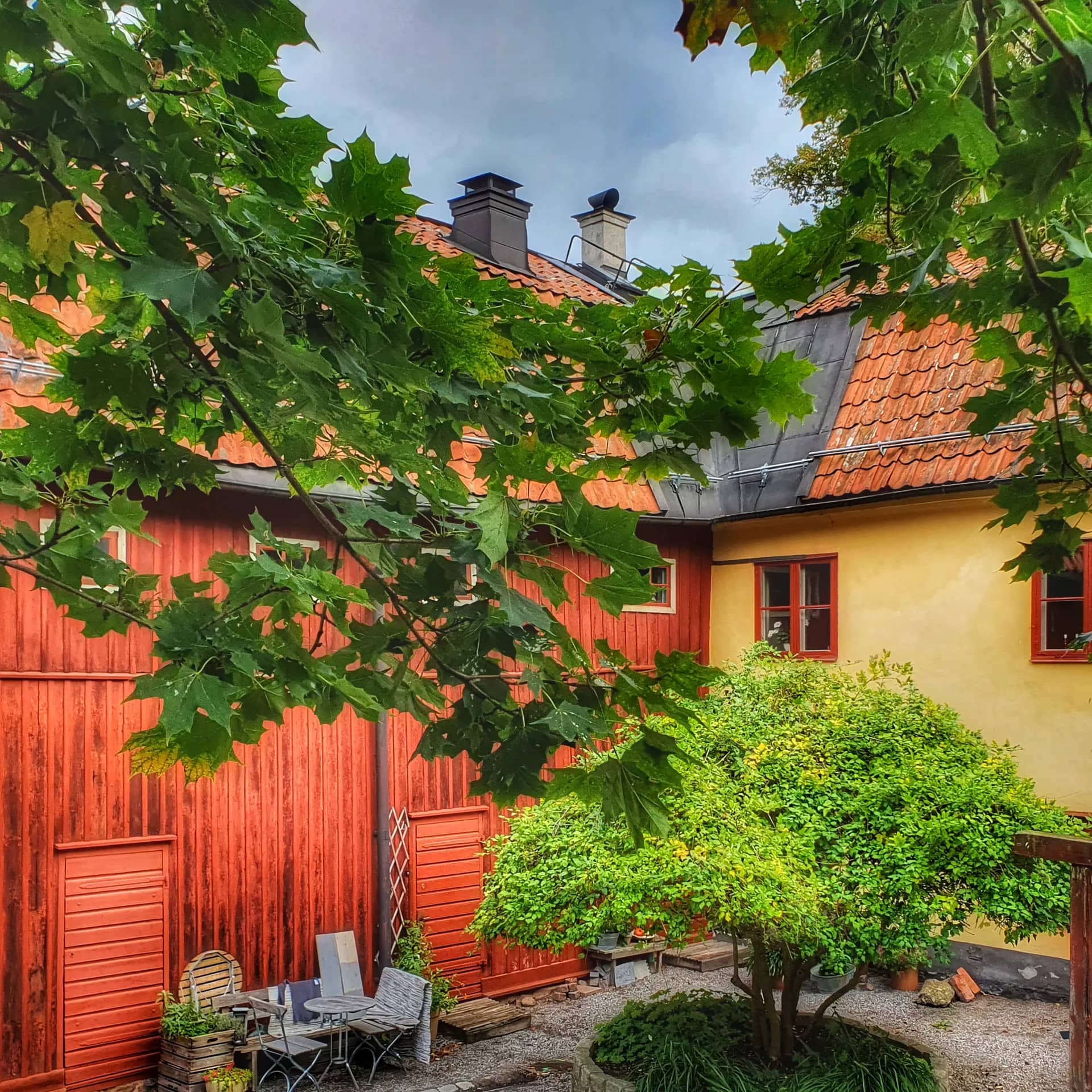
If you walk along Gaveliusgatan today, it is easy to miss the place.
A few older houses. Some trees. People on their way to work or home.
But three hundred years ago, one of Södermalm's most talked-about taverns stood here.
Faggens krog.
The story begins back in 1702 when Petter Fagge the elder established an allotment garden out here at the edge of the city. Stockholm ended roughly here. Beyond the city gates, the countryside awaited.
When his son, Petter Fagge, took over, he received permission to sell drinks to visitors. Slowly but surely, a tavern emerged.
During summer evenings, Stockholmers made their way here to eat, drink, and enjoy themselves. Here, people played skittles, sang songs, and gossiped about the city's residents.
It was a place where you could forget everyday life for a while.
The tavern became so well-known that Carl Michael Bellman let it live on in his songs. In Fredman's Epistle No. 55, we meet Mollberg and the other characters during a lively Midsummer's Eve at Faggen's.
But Faggens krog was not just a place for pleasure.
It was also a meeting place for the city's poor.
In Per Anders Fogelström's novel Children of the Loom, the sisters Greta and Stina come here to sell small items to the tavern guests. It yielded a better income than working at the spinning wheel.
But life on Södermalm was not romantic.
When Greta stays late one evening, she is assaulted. When the police – the "palt" – later find the girls, they are sentenced to six months at the spinning house (women's prison).
In the very same place, therefore, lies both Bellman's laughter and Fogelström's sorrow.
The music and the misery.
The summer party and the poverty.
Another detail links the place to Bellman's world. After Petter Fagge's death, the tavern was run by Eric Nordström, who was the father-in-law of Maria Kristina Kiellström – the woman widely believed to be the inspiration for Bellman's famous Ulla Winblad.
Faggens krog later became a cloth factory. Owners came and went. Stockholm grew and changed.
But the place remains.
When I stop here during my walks, I often think that few places on Södermalm tell so much about the city's history in such a small area.
Here, Bellman and Fogelström meet.
Here, pleasure and work meet.
Here, dreams and reality meet.
And perhaps that is precisely why Faggens krog still has something to say to us, more than two hundred years after the last guests went home.