Yngve Larsson – the man who built the Stockholm of the future
Discover Yngve Larsson's decisive role in shaping modern Stockholm – from the subway to new districts.
There are people who leave their mark on a city, and then there are people who change its direction forever.
Yngve Larsson belongs to the latter.
Most Stockholmers do not know his name. Yet we encounter him almost every day. On the metro on our way to work. When we pass Slussen or look up at the Hötorget buildings. When we cross the Västerbron bridge or move through the suburbs that grew up after the war.
Without Yngve Larsson, Stockholm would have looked completely different.
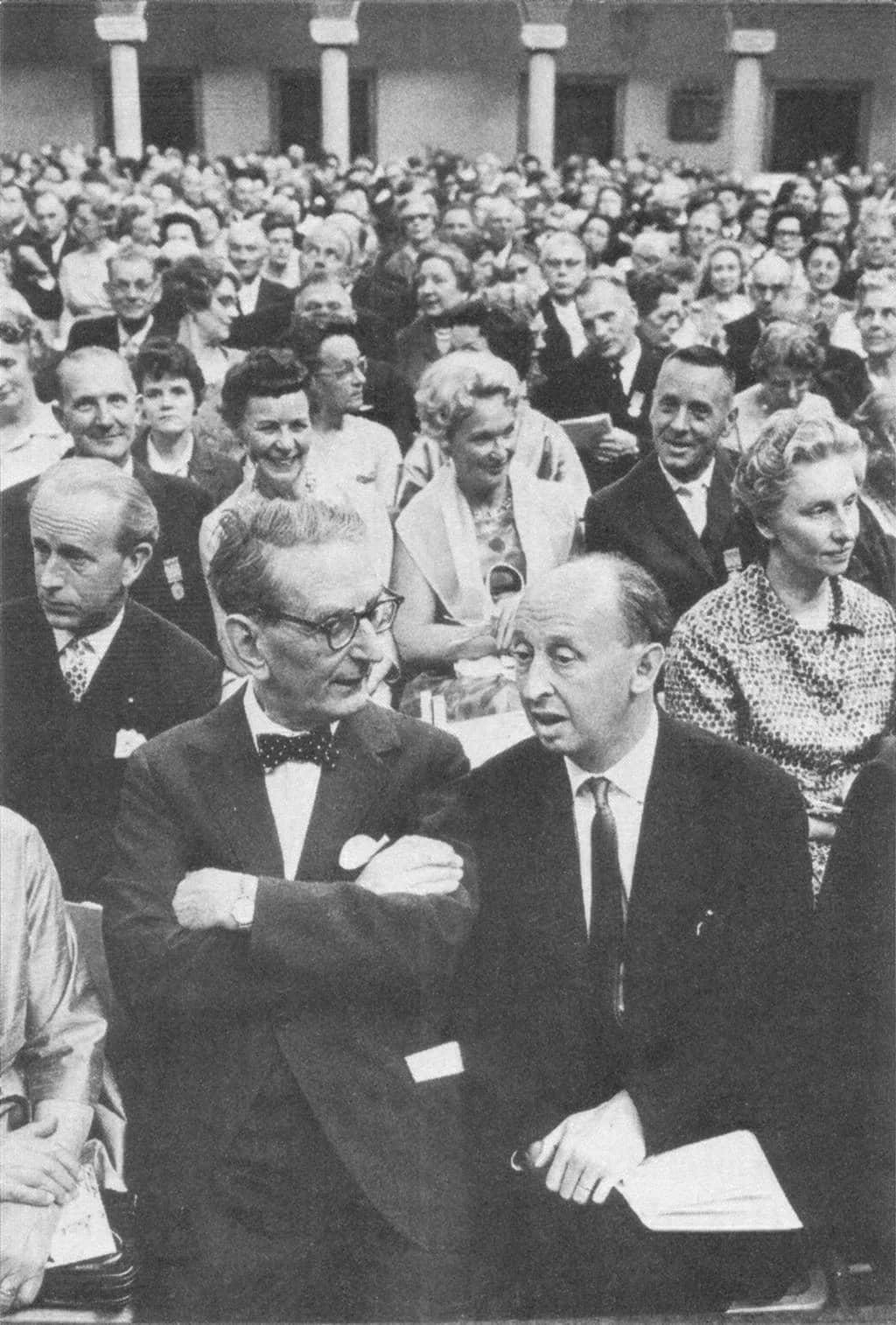
He was born in 1881 in Sundsvall but came to Stockholm at an early age. As a young man, he was fascinated by major cities and their development. While many saw the growing city as a problem, he saw opportunities. He thought in terms of decades rather than electoral terms.
Modern Stockholm
Even before Stockholm had a million inhabitants, he realized that the city would one day need a fast and coherent public transport system. Therefore, he became one of the strongest proponents of the metro.
It took courage to plan for a city that did not yet exist.
As a city commissioner, he came to leave his mark on almost the entire 20th-century Stockholm. He pushed for the expansion of the metro, the development of new districts like Vällingby and Farsta, the construction of bridges and an airport, as well as the major redevelopment of the city center.
He believed in the future.
But the future had a price.
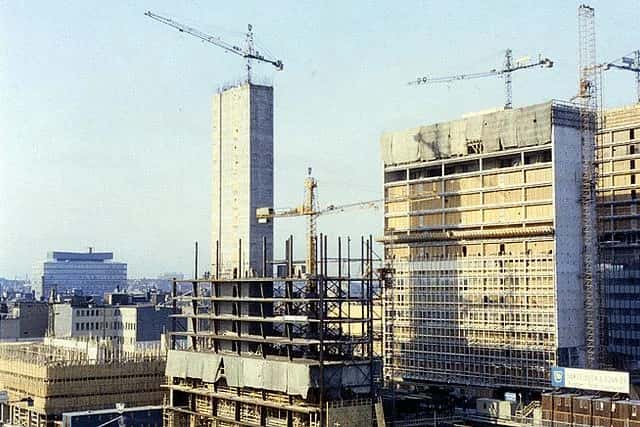
For many Stockholmers, Yngve Larsson also became the man behind the demolitions. Blocks disappeared, old environments were wiped out, and a new city center of glass and concrete emerged. The Hötorget buildings became the symbol of modern Stockholm, but also of the Stockholm that had been lost.
The conflicts of Skogskyrkogården
His name even appears in the story of Skogskyrkogården (The Woodland Cemetery). The conflict between the two architects Gunnar Asplund and Sigurd Lewerentz deepened during the work on the crematorium, and several historians argue that Yngve Larsson's way of handling the project contributed to the two geniuses never really finding their way back to each other.
Still, it is hard to dismiss him.
It is almost like an ancient drama:
Two brilliant architects, a world heritage site, and a determined politician in the middle.

Is Yngve Larsson Stockholm's greatest city builder – or its greatest demolition general?
He was married to a woman from the Bonnier family.
He lived to be almost 96 years old.
He is buried at Skogskyrkogården himself – not far from Gunnar Asplund's grave.
He changed political affiliation several times – Social Democrat, Liberal, and later member of the Liberal People's Party.
During the war, he was a clear opponent of Nazism and committed himself to Norway's cause.
When we board the metro today or enjoy the view from Västerbron, we are still using the city that he envisioned nearly a hundred years ago.
Perhaps that is why Yngve Larsson continues to fascinate.
He was the visionary who saw further than his contemporaries.
But also the man who reminded us that every new city is built on top of an old one.
By Stefan Maurbakken on July 9, 2026