Velocipeden – den första cykelboomen och kvinnors rörelsefrihet
Join us back to the time of the velocipede! Learn about the first bicycle boom and how it gave women increased freedom of movement.
It starts with a shaky ride.
Wood, iron, and a body trying to understand balance.
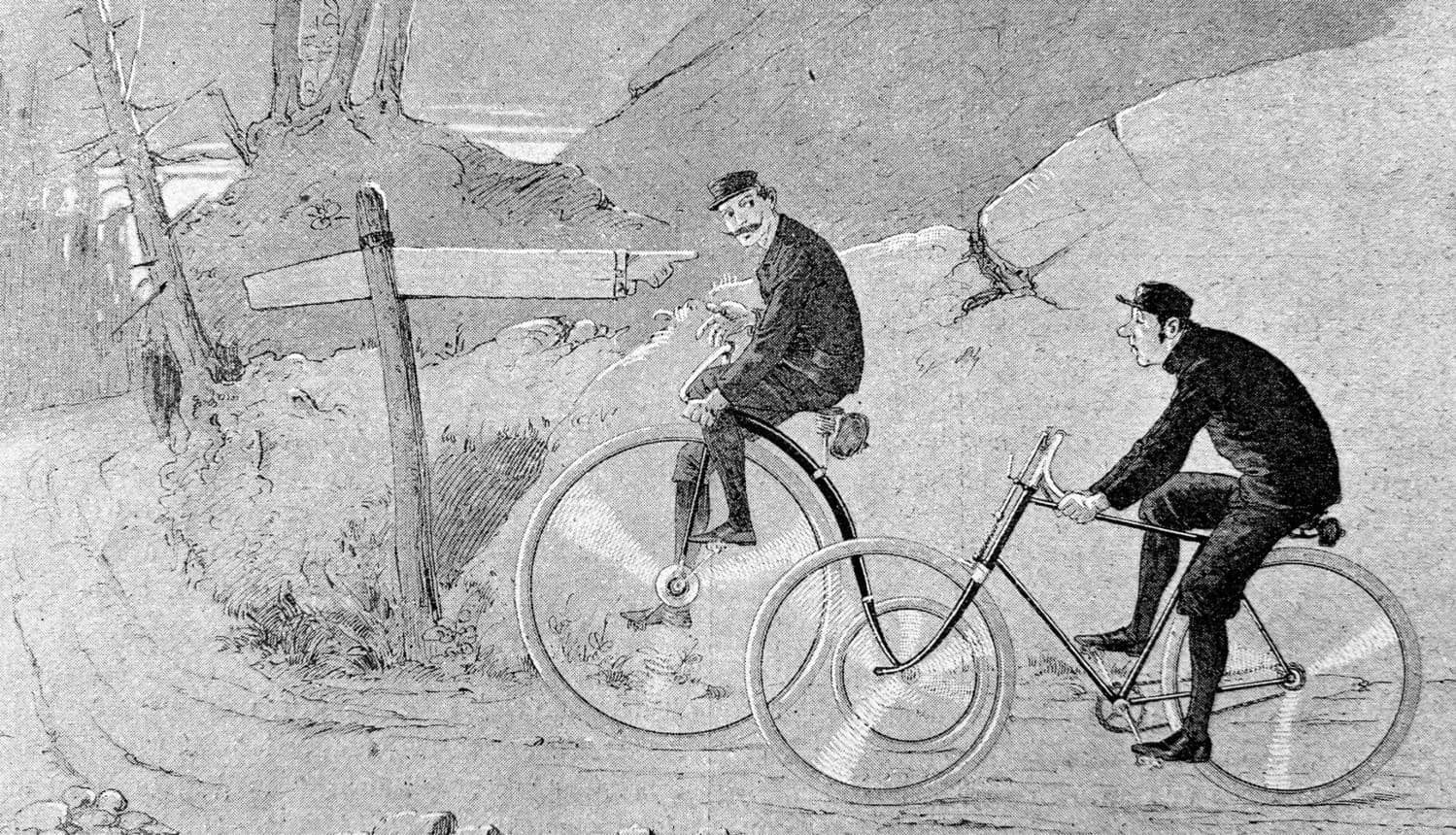
The year is the late 1800s.
Stockholm's streets are still uneven, the cobblestones hard, and the sound from the wheels echoes between the building facades. The velocipede – the predecessor to today's bicycle – makes its entrance.
It is a remarkable sight.
High wheels, rigid frames and a mode of transport that requires both courage and perseverance. But something has been set in motion.
Not just wheels.
But life.
A moment on Stora Bastugatan
I Barn av sin stad står Emelie en dag och ser på när en velociped swishar förbi på Stora Bastugatan.
Kanske stannar hon upp.
Kanske följer hon den med blicken.
Det där nya.
Det där snabba.
Något som inte riktigt hör till – ännu.
Lite som när elsparkcyklarna först dök upp i vår egen tid.
Vi minns hur de kom.
Plötsligt överallt.
Lite vingliga. Lite oväntade.
Skulle de klara trafiken?
Skulle de fungera i stadens rytm?
Och ändå – efter en tid blev de en del av den.
Precis som velocipeden en gång blev.
A new freedom on two wheels
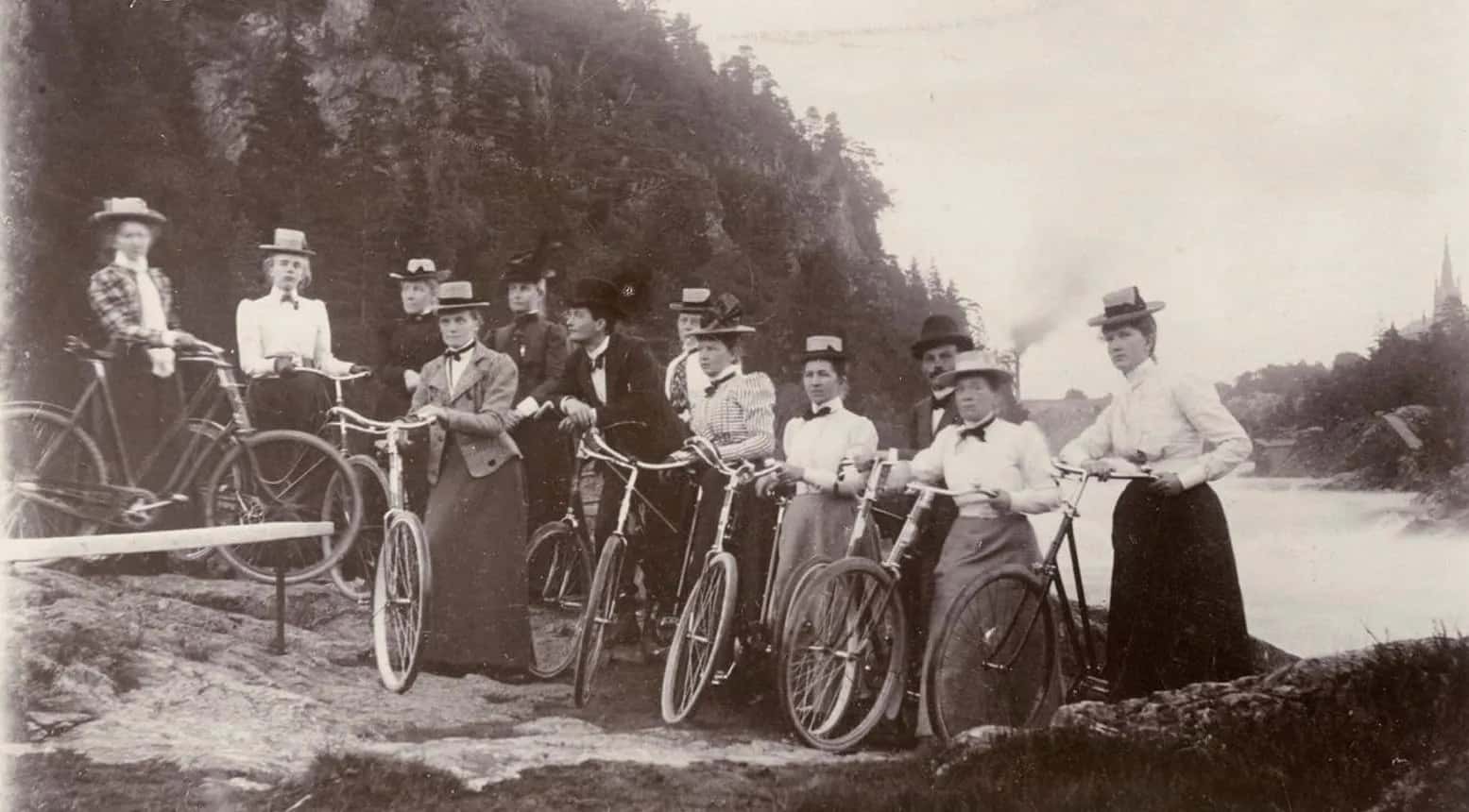
For many, the bicycle was first a pleasure, a novelty, a game for the few.
But quite soon it became something else.
A tool.
For women in the late 1800s, the bicycle meant something that had previously been difficult to achieve:
freedom of movement.
To be able to get around without being dependent on:
company
horse and carriage
fixed structures
Suddenly you could travel alone.
Out into the city.
Out into the landscape.
Out into a bigger life.
Clothes change – and with them the norms
With the bicycle came something as concrete as… clothes.
The long skirts did not work well on a velocipede.
It became impractical. Even dangerous.
So something started to happen.
Skirts were shortened.
Trousers for women were discussed.
The body was given space in a new way.
And with that – norms were questioned.
The bicycle therefore became not just a means of transport.
It became a symbol.
Stockholm in motion
In Stockholm, the bicycle began to appear in parks, along gravel roads and eventually in the more central parts of the city.
People cycled:
in Djurgården
along the roads out towards the malms
on the outskirts of what was not yet quite a city
It was not always welcome.
It was sometimes considered inappropriate.
Especially for women.
But the wheels kept spinning.
A quiet rebellion
It is easy to think of revolutions as something loud.
But sometimes change happens quietly.
Like a woman getting on a bicycle.
The balance first uncertain.
Then obvious.
A movement forward.
Meter by meter.
The velocipede may have been clumsy.
Not always comfortable.
But it carried something bigger.
A direction.
Today – something we almost take for granted
Today we cycle without thinking.
To work.
To a park.
Through the city.
But every time we get on a bicycle, there is a story there.
About courage.
About change.
About getting ahead – on your own terms.
And perhaps – somewhere between the cobblestones –
there is still the echo of a velocipede that once whooshed by.
🌿 The green guide
– stories that move through the city