Authorized Stockholm Guide

Why do we say Merry Christmas – and not Happy Birthday?

In much of Europe, Christmas is clearly linked to the birth of Jesus. In Italy they say Buon Natale, in Spain Feliz Navidad – both effectively mean "happy birthday".

In the Nordic countries, we do something different. We say God jul. The word jul is older than Christianity and is associated with midwinter, darkness and the turning point when the light slowly returns. Christmas was originally a seasonal festival, not a birthday. When Christianity came here, the message was adapted to an already beloved holiday. The result was a mixture of pagan, folk and Christian – and a word that refuses to let go of its past.

Santa – red, green, white… and very old

  • St. Nicholas, bishop in present-day Turkey in the 4th century, was known for his generosity – especially towards children.
  • The homestead elf (gårdstomten) in Nordic folklore, on the other hand, was no gift-giver. He protected the farm, the animals, and the work – and became furious if he did not get his porridge.
  • During the Roman Empire, Saturnalia was celebrated, a midwinter festival where roles were turned upside down, gifts were given, and colorful clothes in red and green were worn.
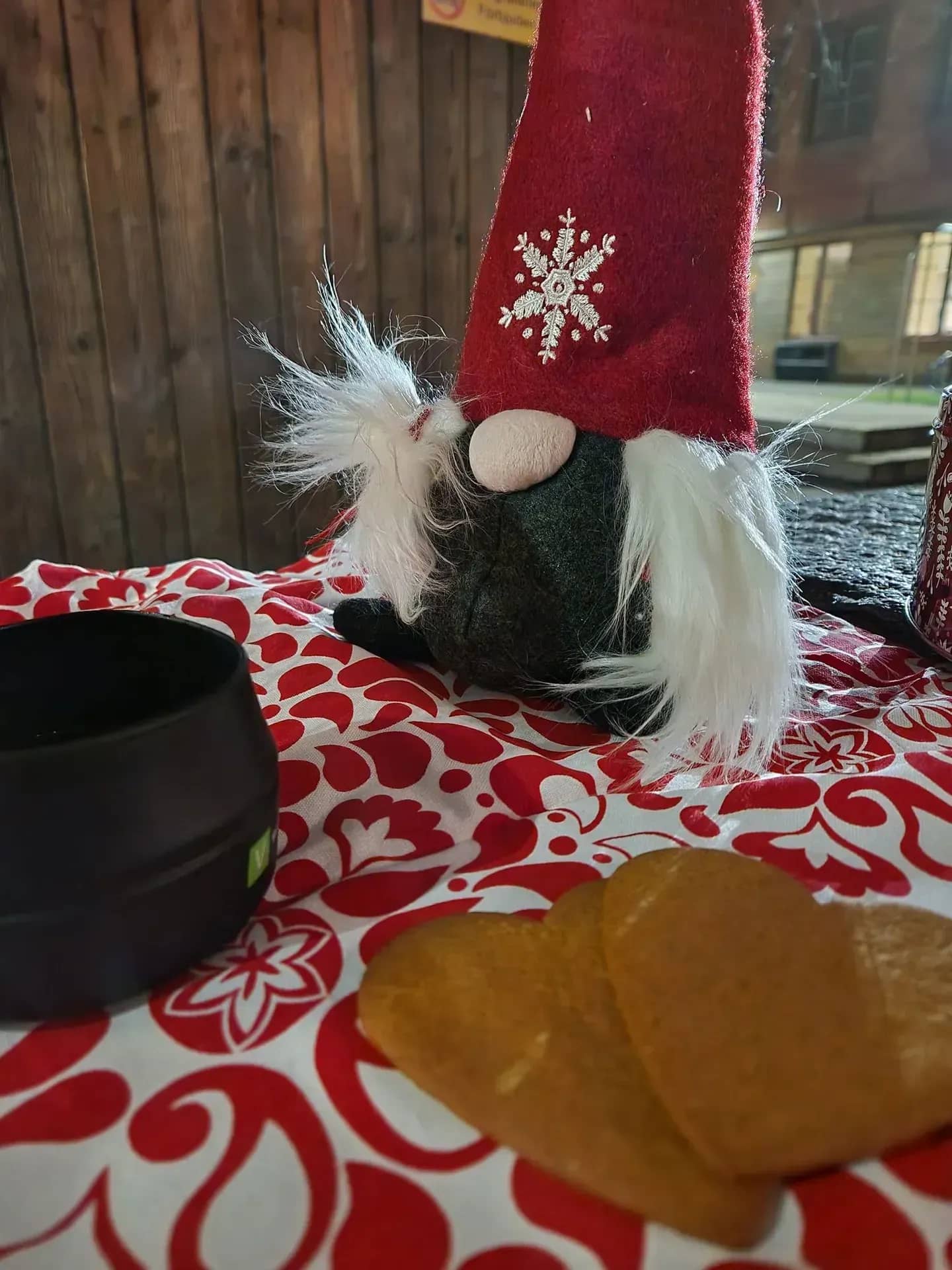
Christmas decoration: Santa with a red hat, white beard, gingerbread cookies, and a black mug

When did we start decorating the Christmas tree?
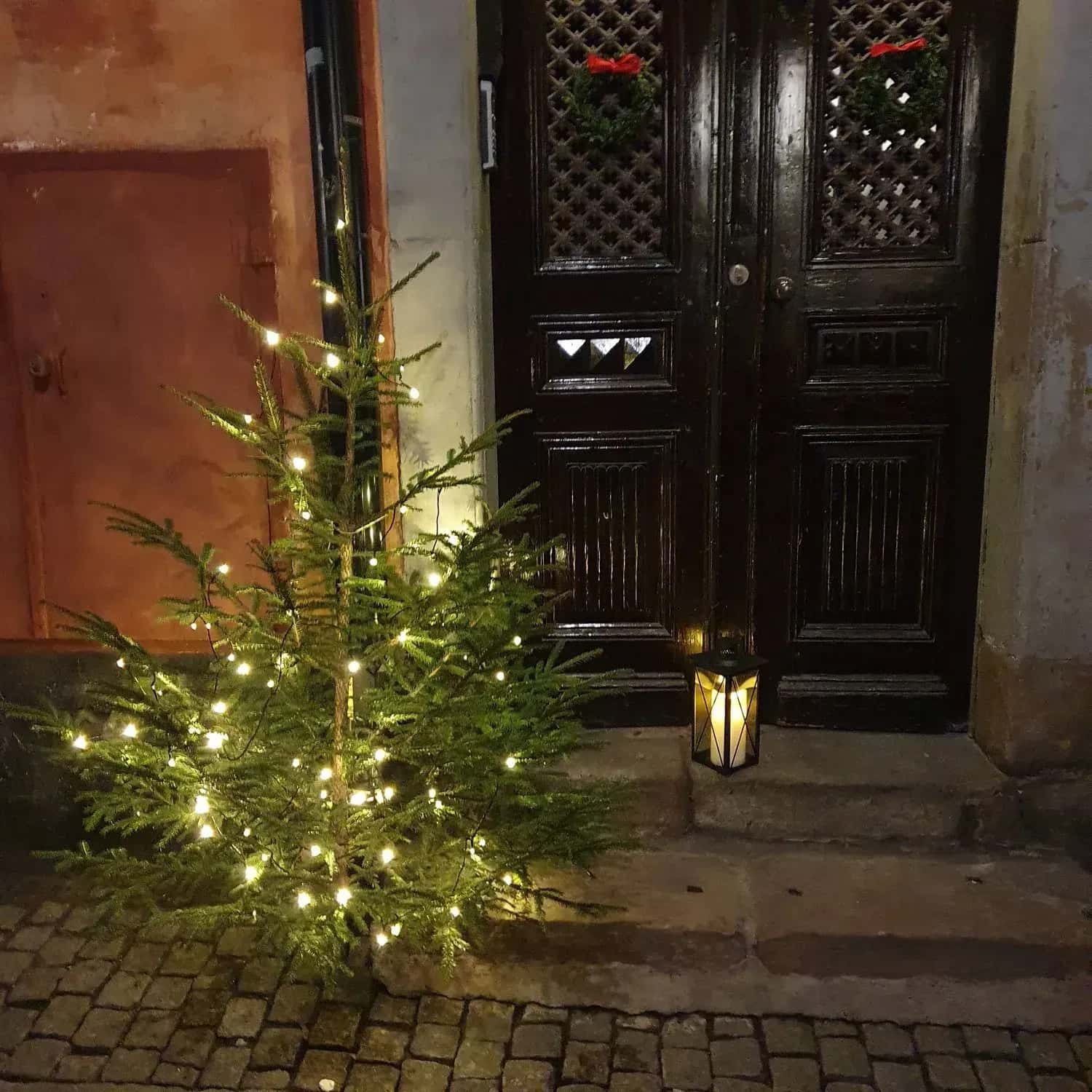
Christmas tree with string lights, a lantern, and wreaths by a door

Mulled wine, saffron buns and Lucia – imported and reinterpreted

The Christmas present – a joke with a long history

How old are gingerbread cookies really?
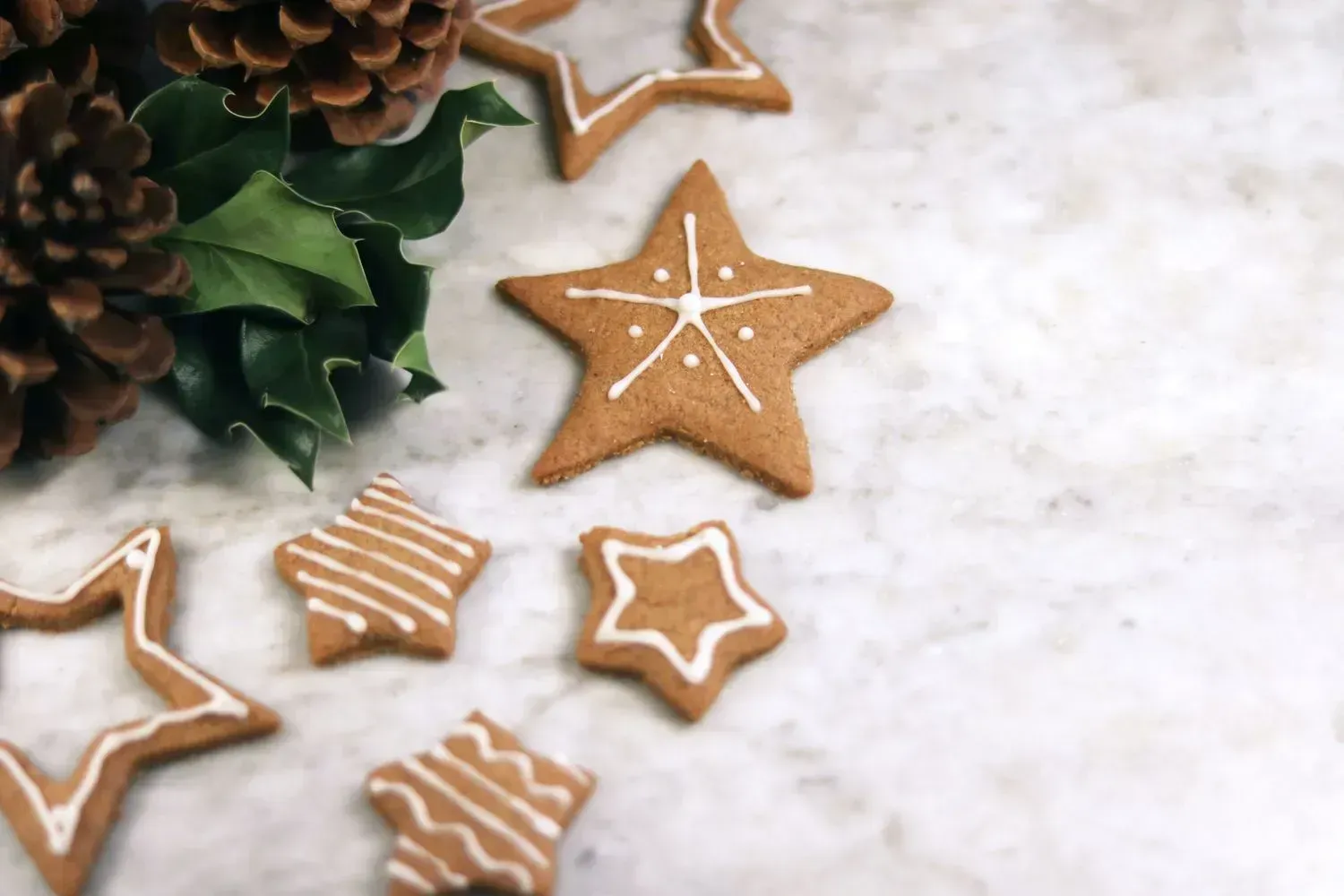
Surprisingly old. Spiced cookies with honey and spices were already baked in Mesopotamia several thousand years ago. They were used both as medicine and durable travel food. In Europe, they became monastery bakes, and in Sweden eventually Christmas cookies – thin, spicy, and full of symbolism.

Gingerbread cookies, star-shaped, with icing. Pine cones and green leaves. Marble background

Christmas Eve – why we celebrate the night before

In the Nordic countries, we celebrate eves, not days. This is related to how the day was counted in the farming community: the day began in the evening. When the work was finished, the house cleaned, and the tools rested – then the celebration began. That's why Christmas Eve still carries the weight of the celebration.

A Christmas built of layers

What I try to convey on the Santa walks is precisely this:
Christmas is not one tradition. It is many, stacked on top of each other. Pagan, Christian, folkloric, bourgeois, commercial – and personal.

And perhaps that is why it continues to feel meaningful.
Not because everything is old.
But because we, time and time again, have chosen to carry it forward.

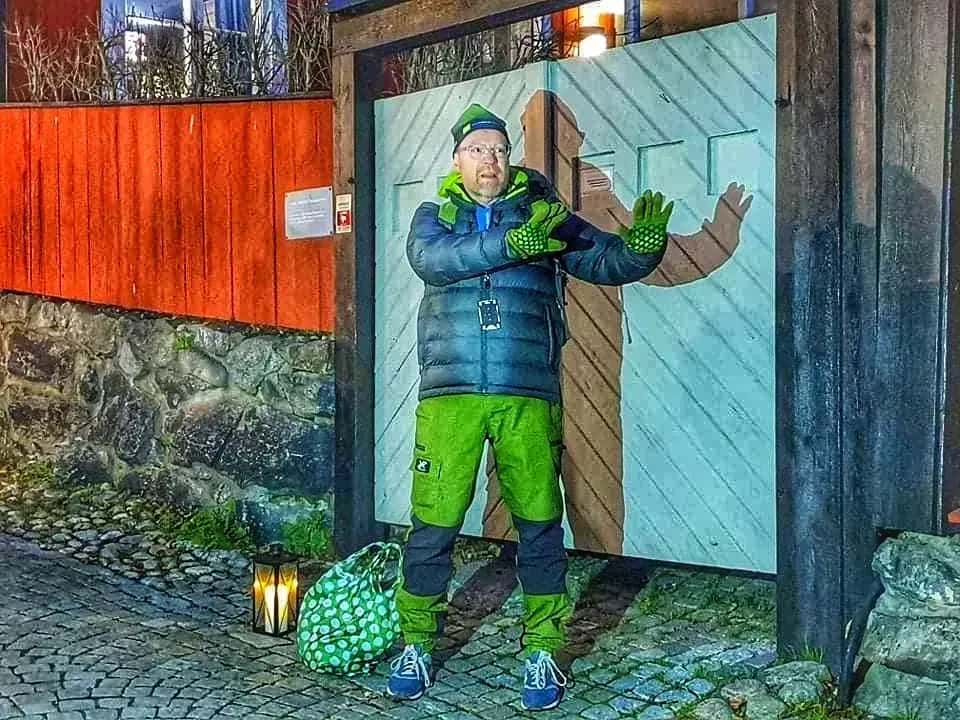
Man in green outfit in front of light blue door. Bag, lantern

And what about Santa?
The Santa walks will return in December 2026, starting at 6:00 PM – and with a sneak preview as early as November 29th. Perhaps something for the family, colleagues, or just for yourself who wants to step right into the stories of Christmas, in lantern light and winter darkness.

Keep an eye on the website and in social media – the dates will appear there as it gets closer.
And until then: everyday storytelling continues. As you know, history never takes a break. 💚

Share post