Authorized Stockholm Guide

Fanfare for wind music – from primal blow to orchestral pulse

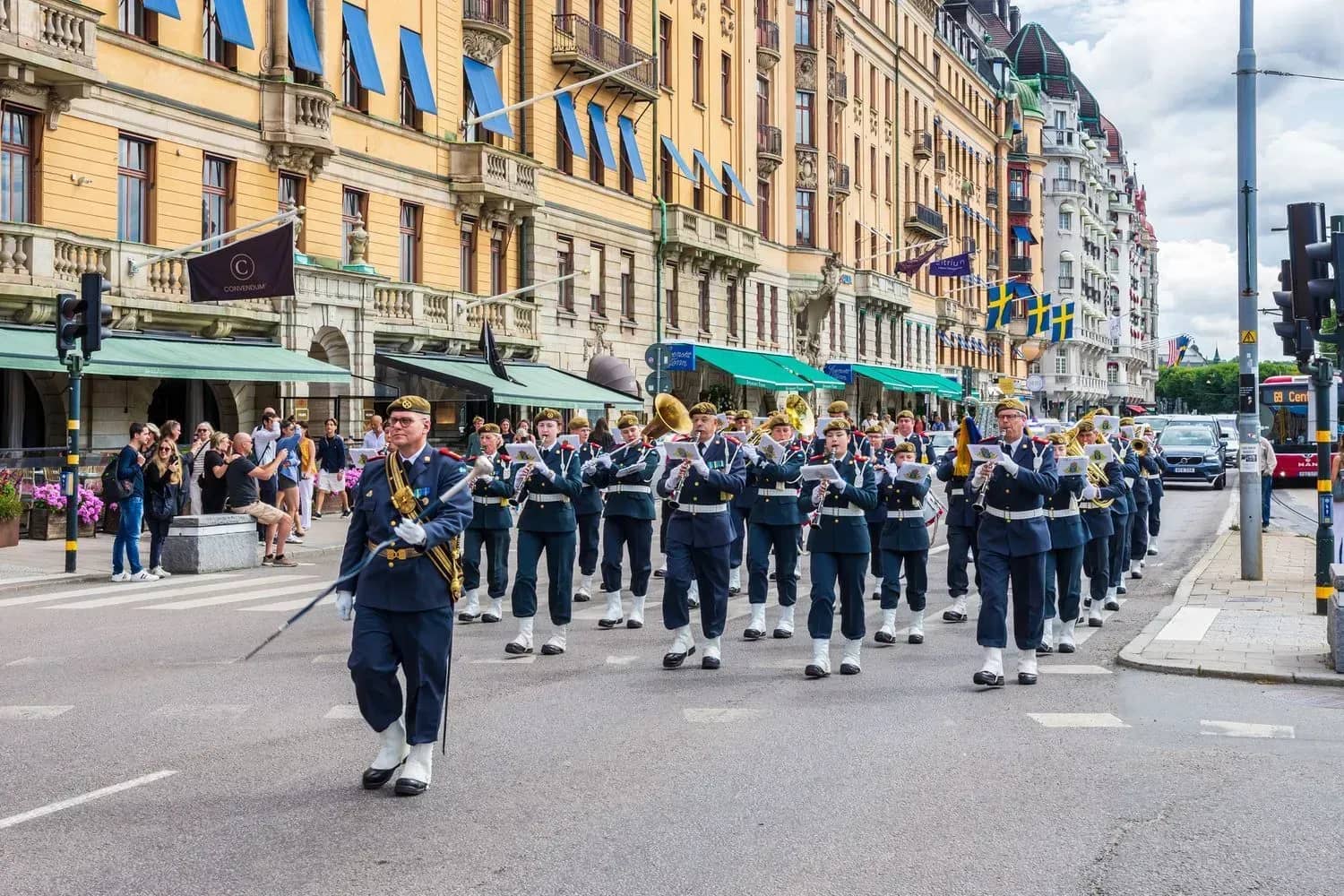
Music band in uniform marching on street. Buildings in the background

🌬️ When humans started blowing

🏰 Fanfares, battle cries, and festivities

🎶 From parades to popular culture

In the 19th century, the brass band flourished as a popular movement in many European countries. In Sweden, interest grew through military bands and the labor movement's music associations. The brass band became a symbol of community and discipline, but also of joy and local pride.

Brass music now spanned everything from national romantic marches to jazz and film music. During the 20th century, both instruments and pedagogy were modernized. Today, computers are used to arrange music, but lungs, lips, and precision are still required to produce tones from a brass or woodwind instrument.
🎷 Technology meets tradition

Today's brass musicians use apps for tuning, digital music stands, and advanced in-ear monitoring on stage. But at the same time, the old traditions live on: March music in folk costumes, school orchestras at graduations, and trumpet fanfares at holidays.

Blowing together is a primal human act – a collective breath, a resounding memory of our history.

💚 The green guide's fanfare

As a guide, I love the sound of wind music as it sweeps across squares or echoes between the city's walls. There is something special about hearing live wind instruments – it awakens something in both body and mind. And of course, it happens that a city walk gets an extra dimension when the tones from a trumpet or clarinet roll in from afar...

Are you celebrating Wind Music Day today? Feel free to share a memory – or a fanfare!

Share post