Hoppa till huvudinnehåll
Auktoriserad Stockholmsguide

Tobakens tid i Stockholm – ett stycke luktande industrihistoria

4 min read

Följ med på en luktande resa i tiden! Vi utforskar tobakens historia i Stockholm, från 1600-talets odlingar till Söders fabriker.

Today, we may primarily associate tobacco with smoking or snus – but in 18th- and 19th-century Stockholm, tobacco was primarily an occupation. A source of income. A craft. And in some neighborhoods, even – a scent that lay like a sweet, suffocating fog over the roofs.

🌱 When did we start growing tobacco in Sweden?

As early as the 17th century, tobacco cultivation began to occur on a small scale in Sweden. The Crown encouraged cultivation because it wanted to reduce imports of foreign goods. Around the 1720s, it really took off, and in Stockholm, tobacco plants were planted in gardens and manor houses – from Södermalm to Kungsholmen.

Tobacco was sensitive. It required warmth, nourishment, protection from frost – and a lot of labor. But in a growing capital with poverty and child laborers, there were plenty of hands.

🧵 Vad var ett tobaksbruk eller ett tobaksspinneri?

Det var här de gröna bladen förvandlades till snus, tuggtobak och rulltobak. Spinneriet fick sitt namn från det snurrande momentet i produktionen – man spann nämligen tobaksblad till "rep" som sedan skars ner till bitar eller maldes. Doften i dessa lokaler var frän, stickande och tung.

I Stockholm fanns många sådana bruk – ett av de mest kända låg vid Rosenlund på Södermalm. Där arbetade kvinnor och barn för låga löner – ibland bara 6–8 öre i timmen, och en vuxen kunde få 1 krona för en hel dags arbete.

👩‍🏭 Who worked in the tobacco industry?

Many women. Many children. It was one of the few factory industries where women were in clear majority. The working environment was tough – tobacco powder in eyes and airways, constant standing work, poor lighting. But it was also a way to get some money for the household. A mother and her daughter could work side by side, sometimes in secret factories – especially if they rolled cigars at home.

🚭 When did we stop growing and manufacturing our own tobacco?

Tobacco cultivation in Sweden decreased after the turn of the century in 1900. It became cheaper to import. But even into the 1930s you could see tobacco fields in Skarpnäck and Hägersten.

Last sign of life? During the emergency preparedness period in the 1940s, new attempts were made to grow Swedish tobacco – but it never became more than an emergency alternative.

✨ Tobacco track today?

Walking along the streets of Södermalm, you may sometimes see a name: “Tobaksspinnargatan” or an old gate with an inscription. Perhaps you sense a faint scent of something bitter and spicy – or maybe it's just the city's history whispering about its past.

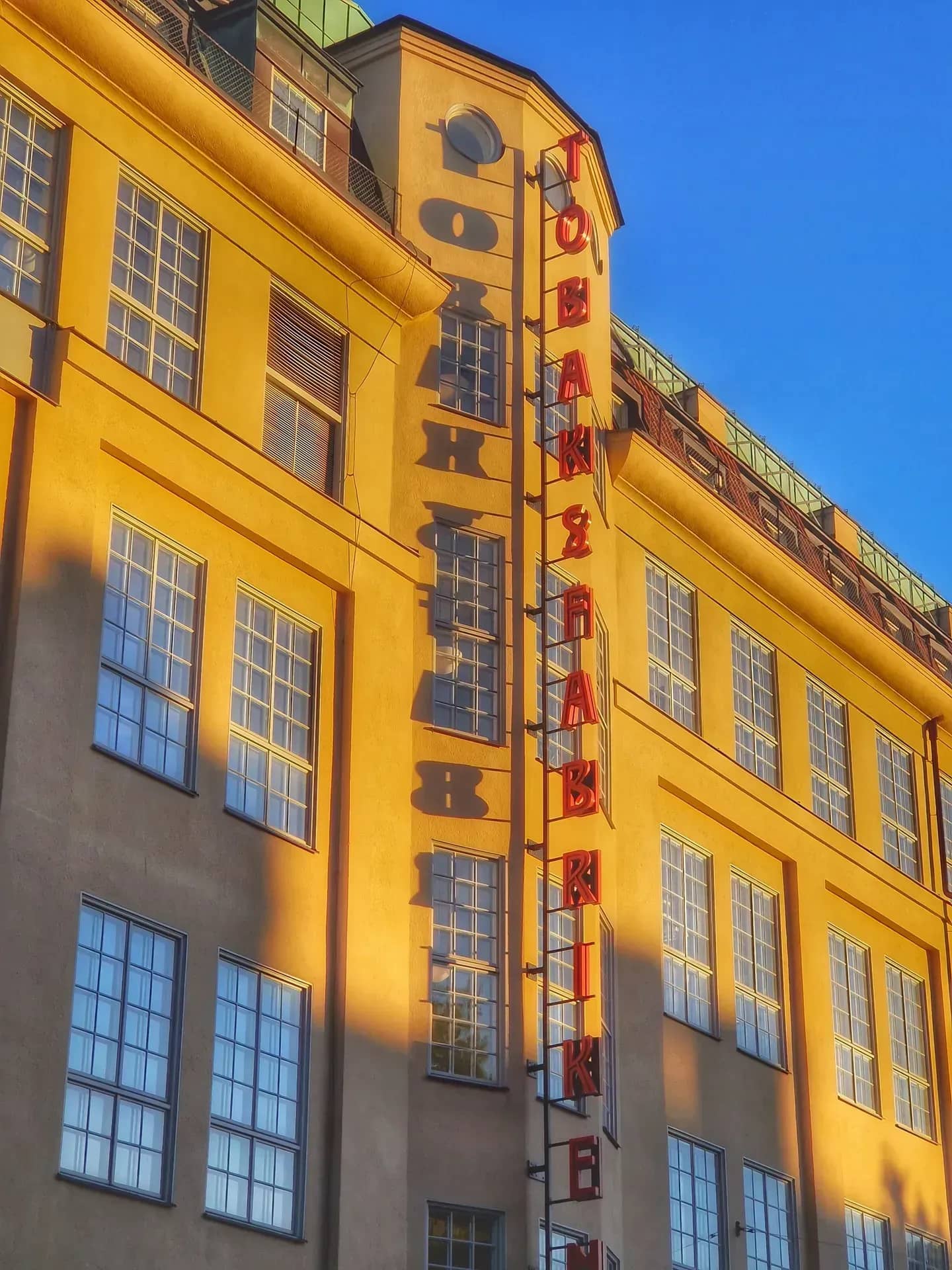
Fasad på gult hus med många fönster. Vertikal skylt med röda bokstäver: "Tobaksfabriken"
Dela inlägg