Dalkullor in the big city – female labor and population movement
Learn about the journey of the Dalkullor: the women who sought work in the city and shaped Sweden. A story of courage and population movement.
A story of courage, social mobility and a journey that shaped Sweden.
When we talk about labour mobility in Sweden, many think of industrialisation, the sawmill era or the emigrants who left the country in their hundreds of thousands. But one of the most significant movements of people took place within Sweden's borders – and often in silence.
It is the story of the dalkullor. About the women from Dalarna who left their home villages to seek work in Stockholm and other growing cities, long before women's work began to appear in official accounts.
This is their story.
From villages in Dalarna to the streets of the capital
During the 18th and 19th centuries, young women from Dalarna began to make long journeys south. Stockholm was growing rapidly – but lacked labour. In the villages at home, however, there was both knowledge, strength and a tradition of women being able to support themselves.
The dalkullor came in groups, often organised by older women who had already established contacts in the city. The journey itself was an achievement:
mile after mile on foot, with luggage, food and work tools.
When they arrived, a completely different world awaited them – the sound from the harbours, the crowds in the Old Town, the smells from squares and backyards, and a pulse that differed from the calm rhythm of the Dalarna countryside. But the dalkullor took their place. And they left their mark.
What did the dalkullor work with?
The dalkullor were known for being strong, reliable and hardworking. They quickly became a sought-after workforce in several areas:
🧺 Washerwomen and manglers
Skilled in textile care and often hired by both households and businesses.
🌼 Hawking and sales
They wandered through the city with baskets filled with lace, flowers and handicrafts.
🧹 Cleaning and housekeeping
In wealthy households, they worked hard for months before returning home.
🪵 Heavy labour, loading and heavy lifting
The dalkullor were not afraid of physically demanding work and were known for their strength.
A private network of security
The dalkullor never travelled alone. They had their own systems, groupings and leaders.
They lived together, often cramped but safe, and organised the work collectively.
These female networks were one of the reasons why so many succeeded in the city.
A class journey – but also a risk
For many, the journey meant an opportunity for economic independence and a chance to contribute to the family at home.
But life in the city was also tough — long working days, insecure housing and harsh conditions.
Despite this, many returned year after year, and some stayed for good.
A tradition that still lives on – in a new form
A little jokingly, a little seriously, and entirely in the spirit of tradition, a special hike takes place every year in May:
dalkullor walking towards Stockholm.
It is a modern, playful tribute to history — a symbolic walk that recalls their journeys and work through the centuries.
And some years, especially during warming May days, you can see many dalkullor gather at Skansen, dressed in their beautiful costumes, singing, laughing and honouring their foremothers.
It's as if history comes to life right then.
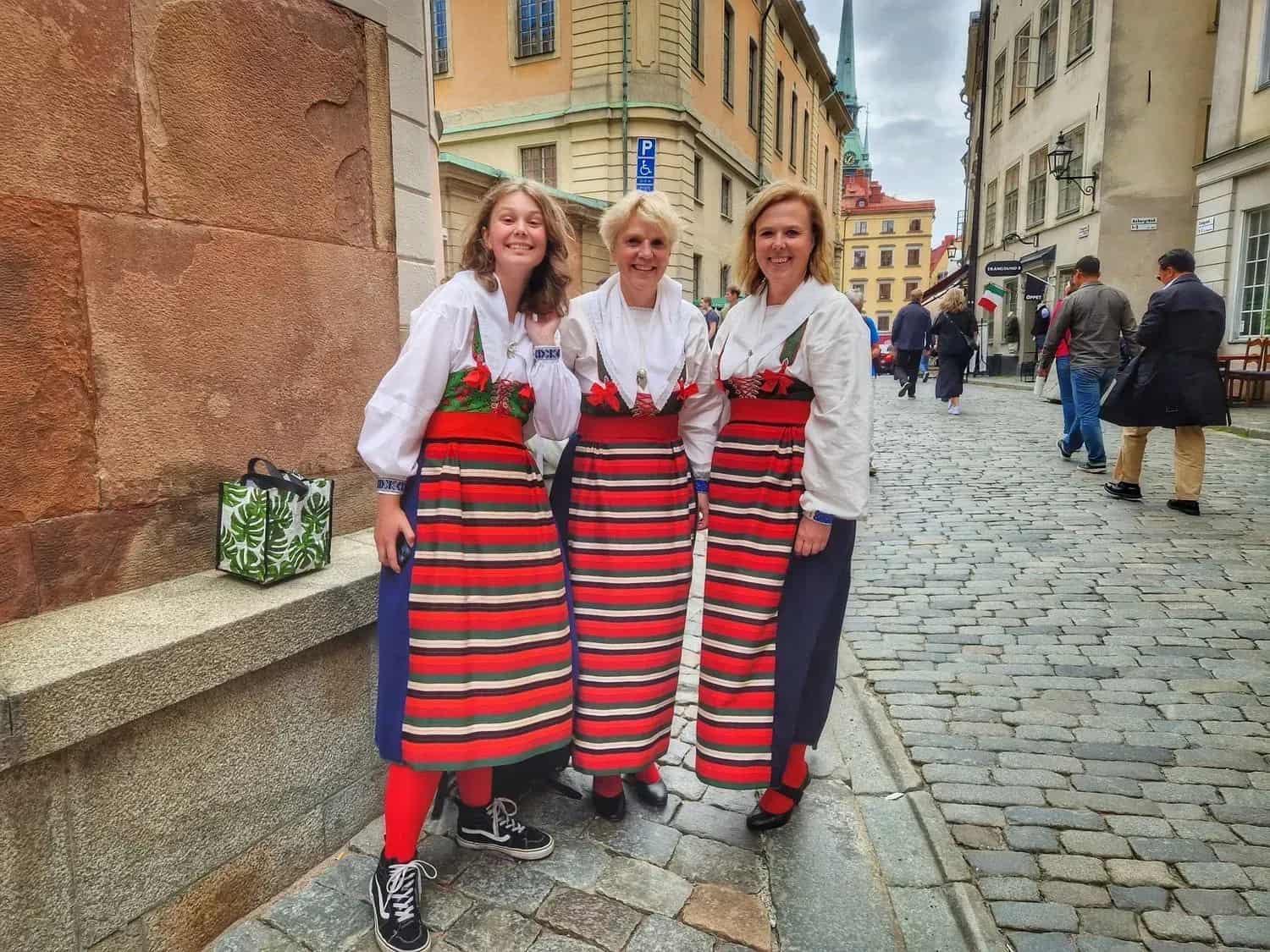
Traces of the dalkullor in today's Stockholm
Today you can still feel the presence of history.
At Hagaparken, Vasastan, Skeppsbron or along the quays of Södermalm, we walk in their footsteps.
In old laundries, archival images and folklore depictions, we meet their faces – always in motion, always working, always necessary.
Why should we remember the dalkullor?
Because their story is the story of women.
Because they shaped the cities as much as the factories, the men and the machines.
Because they challenged the norms of their time and showed that women did not just come along – they led the way.
Their journey from Dalarna to Stockholm is one of Sweden's most poignant stories of courage, identity, opportunity and change.