The age of steam – steamboats, factories and industries in the city
Join us on a journey through Stockholm's steaming history, from steamboats to factories. Discover the traces that still characterize the city today.
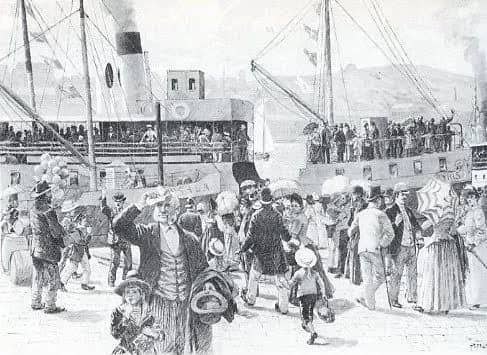
There are moments in history when an entire city takes a deep breath – and exhales into change. For Stockholm, the age of steam was just such an era. In just a few decades, we went from sail, horsepower and crafts to hissing valves, thumping machines and factories that rose along the quays.
The scent of coal and oil mingled with curiosity and optimism. Wheels paddled rhythmically against the waters of Lake Mälaren, chimneys rose towards the sky as monuments to human ingenuity, and on the streets the first trams rumbled along as messengers of a new, faster time.
It was noisy, sooty – and completely transformative.
And in the midst of this change, a young farmhand enters the city, barefoot and with hope as his only capital.
In 1860, Henning Nilsson walks into Stockholm – the beginning of Per Anders Fogelström's City of My Dreams.
His journey is fiction, but shrouded in the reality of steam, noise and dreams of the future. Henning saw the same chimneys rising, the same steamboats chugging out towards the horizon, the same sparks that ignited both hope and anxiety in the people of the time.
That's why I often return to Fogelström on my walks: he captures how the city felt in the years of steam.

The steamboats – when Sweden became smaller
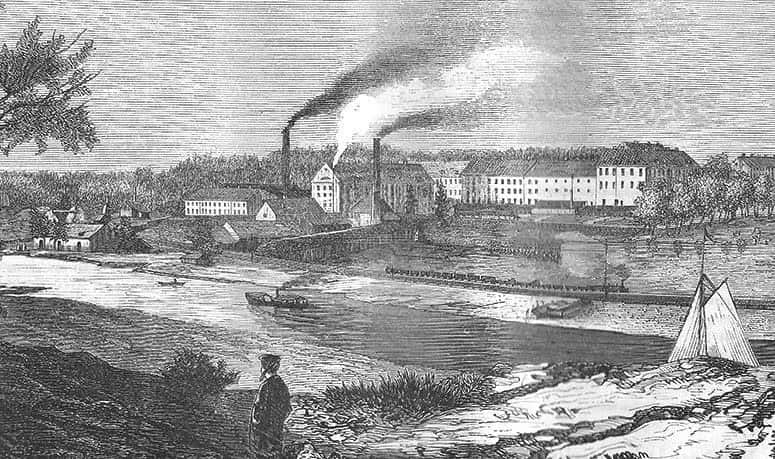
Before the steam engine, a trip to the manor houses of the Mälardalen region or the islands of the archipelago took days, sometimes weeks, depending on the weather. Then came the steamboats – and with them a new rhythm, a new way of life.
Engelbrekt, Mariefred, Norrtälje… they carried more than passengers. They carried the future, letters, news, fashion and ideas. They bound the country together like a circulatory system, and in their wake followed modernity.
At Skeppsbron, passengers stood in neat rows with suitcases, hats and picnic baskets. At Stadsgården, the coal carriers' shovels thundered. And on Riddarfjärden, the smoke lay like a milky veil over the water.
Stockholm became a hub – a world-class port city.

The factories take their place
Anyone who wanders through Stockholm today encounters traces of the age of steam everywhere – although they often hide behind climbing roses, ice cream parlors and modern offices. Where we today drink cappuccino, shop for sneakers or go to art exhibitions, once thundered presses, hammered riveting machines and wheelworks. The city seethed with activity – and with risks. Fires were a constant danger, explosions not uncommon. But even there, in the rain of sparks, Stockholm grew into modern times.
- The gasworks in Hjorthagen – industrial romanticism and brick dreams
- The basilica in Vinterviken where Alfred Nobel's dynamite was born from steam and fire
- Beckholmen – shipyard, pitch and tar that stayed in the clothes for weeks
- Danviken's hospital and the early machine shops around Hammarby lake
- The Royal Mint on Kungsholmen, where metal met machine
The city of workers
Steam power not only changed the city's silhouette – it changed people's lives.
Child laborers, factory girls, lumberjacks, coal carriers, stevedores. Long days, heavy loads, dangerous workplaces. At the same time, a new pride:
I am building something bigger than myself.
I am part of the future.
Here the labor movement, the popular movements, the language of solidarity are born. From steam – democracy.
From soot to solar cells
Today the city whispers rather than whistles. The steam engines have fallen silent, the chimneys have become cultural monuments and the old industrial districts are blossoming with restaurants, culture, housing and parks.
But if you listen carefully when you walk along the water, you may still hear:
A steam horn echoing through the morning mist
A wheel that gurgles against the quay edge
A cry from a loading crane at Saltsjön
It is Stockholm's heartbeat – then and now.
Because history remains. Not in the steam anymore, but in the feeling of movement, innovation and a constant forward motion.
From soot to solar cells
Idag viskar staden snarare än visslar. Ångmaskinerna har tystnat, skorstenarna blivit kulturminnen och de gamla industrikvarteren blomstrar av restauranger, kultur, bostäder och parker. Det är Stockholms hjärtslag – förr och nu. För historien finns kvar. Inte i ångan längre, men i känslan av rörelse, innovation och ett ständigt framåt. Men lyssnar du noga när du går längs vattnet hör du kanske ännu:
- A steam horn echoing through the morning mist
- A wheel that gurgles against the quay edge
- A cry from a loading crane at Saltsjön
Would you like to come along into the Stockholm of steam?
On my city walks, I tell you more about the people behind the machines:
👩🏭 factory workers
🛳 the steamboat captain
🔧 the engineers' dreams
🔥 coal-shoveling stokers
🧭 inventors, visionaries, entrepreneurs
And of course Henning Nilsson – who enters the city just as the steam lies thick over the roofs and the future burns in his chest.
Welcome to join.
The steam has settled – but the story is still warm.