Fanfare for wind music – from blowing out to orchestral pulse
Join us on a journey through the history of wind music, from the earliest sounds to today's orchestral pulse.
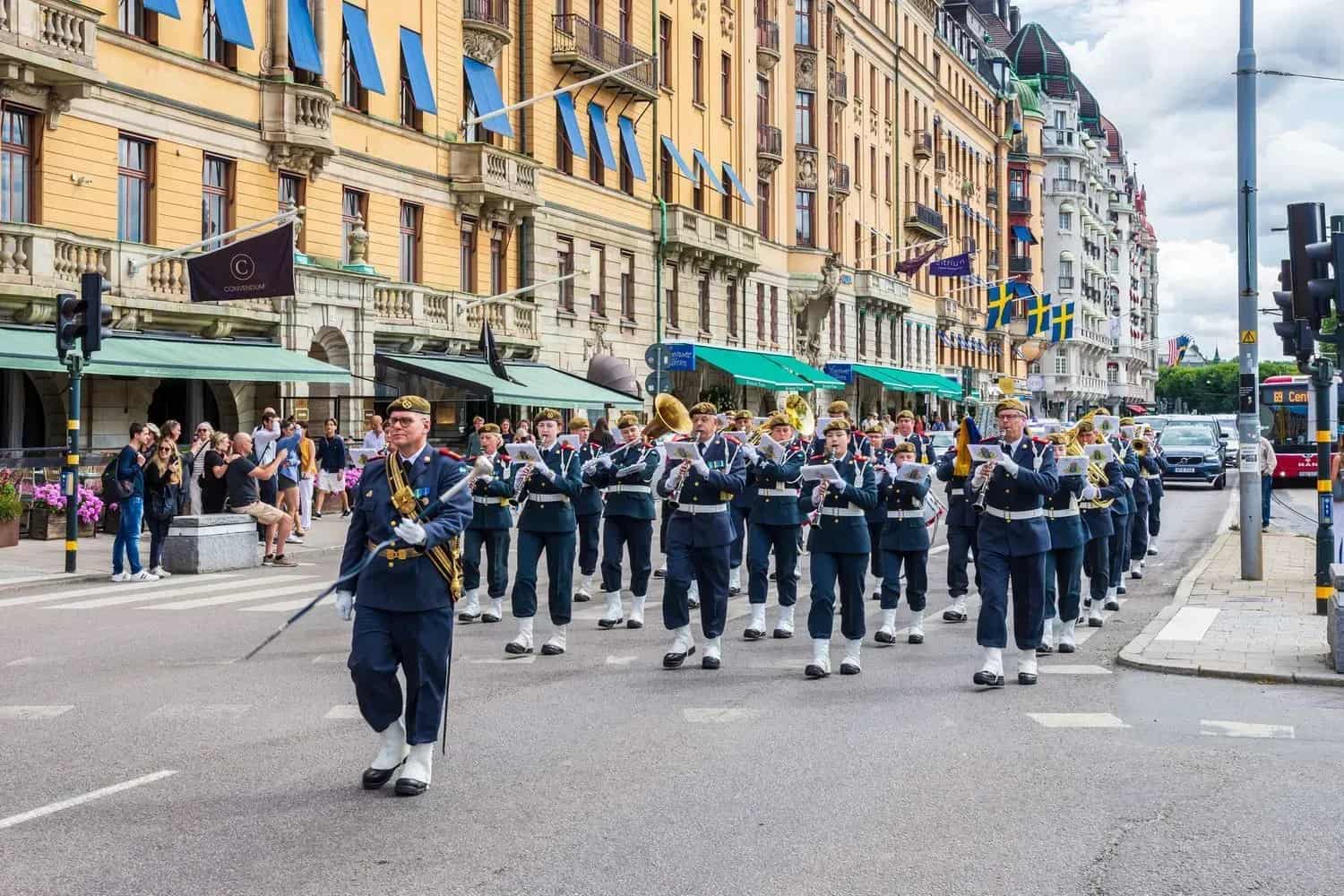
On May 24, we celebrate Wind Music Day – a celebration of a soundscape that has sounded through war, love, royal ceremonies and sausage barbecues in the park. But how did it actually start? How did man discover that an empty tube could create tones that could carry over plains and lakes?
🌬️ When man started blowing
It all started with air – and curiosity. The oldest "wind instruments" we know of are actually nature's own: animal skeletons, horns, shells and bone tubes. As early as the Stone Age, man used these objects to create sounds – sometimes to communicate, sometimes to scare enemies, and often to reinforce rites and ceremonies.
A shell as a wind instrument has been found in caves in present-day France – dated to over 17,000 years ago! It is therefore no exaggeration to say that wind music is one of mankind's oldest art forms.
🏰 Fanfares, battle cries and festivities
During antiquity and the Middle Ages, wind instruments took on a more military role – trumpet-like horns were used in armies to coordinate troops, and pipes to give signals. As societies grew, wind music also became part of the sound world of the court and the church. During the Renaissance, instruments such as the shawm, sackbut (prototype of the trombone) and crumhorn were developed, and soon small ensembles began playing at city festivals and processions.
It was during the 17th and 18th centuries that the foundations of modern wind music were laid – in parallel with the orchestral form. Cities hired musicians who played in the squares, in churches and at ceremonial occasions. Eventually, the city's music corps were born – a link between people and power.
🎶 From parades to popular culture
During the 19th century, the wind orchestra flourished as a popular movement in many European countries. In Sweden, interest grew through military bands and the labor movement's music associations. The wind orchestra became a symbol of community and discipline, but also of joy and local pride.
Wind music now spanned everything from national romantic marches to jazz and film music. During the 20th century, both instruments and pedagogy were modernized. Today, computers are used to arrange music, but lungs, lips and precision are still required to produce tones from a brass or woodwind instrument.
🎷 Technology meets tradition
Today's wind musicians use apps for tuning, digital music stands and advanced in-ear monitoring on stage. But at the same time, the old traditions live on: Marching music in folk costume, school orchestras at school graduations, and trumpet fanfares at holidays.
Blowing together is a primal human act – a collective breath, a sounding memory of our history.
💚 The Green Guide's fanfare
As a guide, I love the sound of wind music as it sweeps across squares or echoes between the city's house walls. There is something special about hearing live wind instruments – it awakens something in both body and mind. And of course, a city walk gets an extra dimension when the tones from a trumpet or clarinet roll in from afar...
Are you celebrating Wind Music Day today? Feel free to share a memory – or a fanfare!