Samuel Owen - the Englishman who put steam in Stockholm's bloodstream
Join us in 19th-century Stockholm and meet Samuel Owen, the Englishman who revolutionized the city with steam power and industry.
In the early 19th century, an adventurous Englishman came to Stockholm with his pockets full of knowledge about the new era's driving force – the steam engine. His name was Samuel Owen (1774–1854) and he would become one of the most colorful industrialists in Sweden.
Owen grew up in Shropshire, England, and worked early in workshops where steam engines and new inventions took shape. In 1804, he was lured to Stockholm by Swedish merchants who needed expertise in this new technology. It was the steam power that attracted – here was the opportunity to build the machines of the future for ships, factories and shipyards.
Once in place, he quickly became a technology pioneer:
- He started Motala Verkstad, which became a hub for Swedish industry.
- He built some of the country's very first steamboats, including Amphitrite and Stockholm, which accelerated sea traffic and changed travel.
- He designed machines for sawmills, printing houses and factories that helped Sweden into the industrial era.

But Owen was more than an inventor. He was a Methodist and temperance advocate – an odd figure in a contemporary Stockholm where brandy flowed. His religious commitment made him one of those who brought Methodism to Sweden. In private, he lived an eventful life, married several times and had connections to famous cultural families – one of his wives was related to August Strindberg.
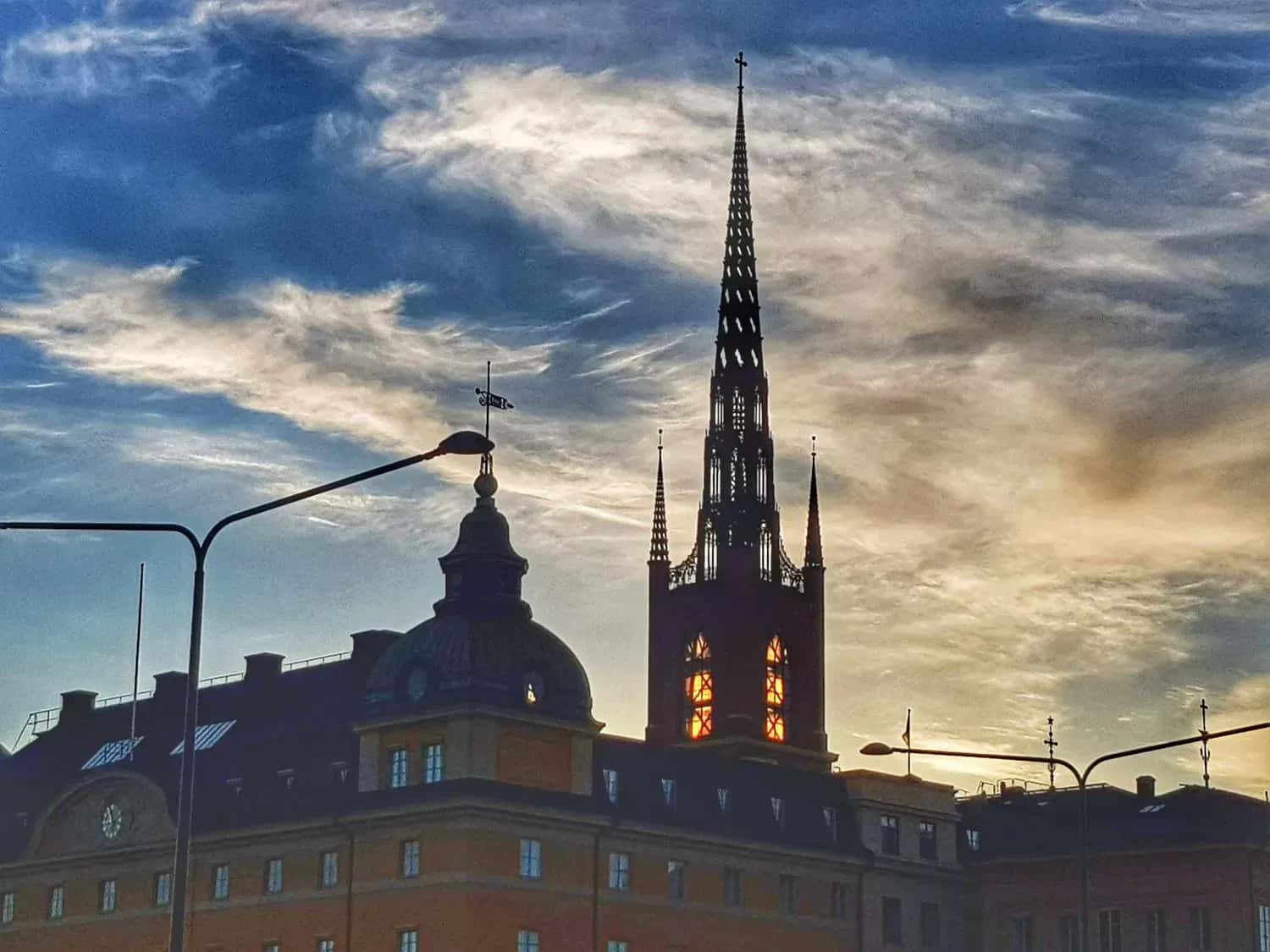
🔨 Owen's imprint on the city's silhouette – Riddarholmskyrkan's spire
When Riddarholmskyrkan's medieval tower was damaged by fires in the 18th century, it was decided during Karl XIV Johan's time that the church should have a new, modern spire. The architect Carl Fredrik Sundvall designed a 43-meter-high cast iron spire – something daring for its time.
To succeed with the technically demanding work, Samuel Owen and his workshop were hired. They contributed knowledge and deliveries to the spire that was erected during the 1830–40s. Even today, the elegant cast iron spire rises above Riddarholmen as an iron proof of Owen's influence over modern Stockholm.

⚓ A man who changed Stockholm
Samuel Owen not only helped drive the steamboat traffic – he helped create a new city, both technically and visually. When he died in 1854, he had made an impression that few think about today: steam engines, ships, industrial workshops and even details on church spiers that shaped Stockholm's skyline.
The next time you see a steamboat gliding across Lake Mälaren or look up at Riddarholmskyrkan's spire, you can think of the English engineer who brought steam, iron and modernity to Sweden – and left a legacy that is still felt in the city's soul.