Dalkulla Women in the Big City – Female Labor and Population Movement
Lär dig om dalkullornas resa: kvinnorna som sökte arbete i staden och formade Sverige. En berättelse om mod och folkförflyttning.
En berättelse om mod, klassresa och en resa som formade Sverige.
När vi talar om arbetskraftens rörlighet i Sverige tänker många på industrialiseringen, sågverksepokerna eller emigranterna som lämnade landet i hundratusental. Men en av de mest betydelsefulla folkförflyttningarna skedde inom Sveriges gränser – och ofta i tystnad.
Det är historien om dalkullorna. Om kvinnorna från Dalarna som lämnade sina hembyar för att söka arbete i Stockholm och andra växande städer, långt innan kvinnors arbete började synas i officiella berättelser.
Det här är deras historia.
From villages in Dalarna to the streets of the capital
Under 1700- och 1800-talet började unga kvinnor från Dalarna ge sig ut på långa resor söderut. Stockholm växte snabbt – men saknade arbetskraft. I byarna hemma fanns däremot både kunskap, styrka och en tradition av att kvinnor kunde försörja sig själva.
Dalkullorna kom i grupper, ofta organiserade av äldre kvinnor som redan hade etablerat kontakter i staden. Resan i sig var en bedrift:
mil efter mil till fots, med packning, mat och arbetsredskap.
När de kom fram väntade en helt annan värld – ljudet från hamnarna, trängseln i Gamla stan, dofterna från torg och bakgårdar, och en puls som skiljde sig från Dalabygdens lugna rytm. Men dalkullorna tog sin plats. Och de satte spår.
What did the Dalkulla women work with?
The Dalkullorna were known to be strong, reliable, and hardworking. They quickly became a sought-after workforce in several areas:
🧺 Laundresses and Mangle Women
Skilled in textile care and often hired by both households and businesses.
🌼 Traveling Sales and Sales
They wandered through the city with baskets filled with lace products, flowers, and handicrafts.
🧹 Cleaning and Housework
In wealthy households, they worked hard for months before returning home again.
🪵 Heavy Work, Loading, and Heavy Lifting
The Dalkullorna were not afraid of physically demanding work and were known for their strength.
A private network of security
The Dalkulla women never traveled alone. They had their own systems, groupings, and leaders.
They lived together, often crowded but safe, and organized work collectively.
These female networks were one of the reasons why so many succeeded in the city.
A class journey – but also a risk
For many, the journey meant an opportunity for economic independence and a chance to contribute to the family back home.
But life in the city was also tough — long working days, insecure housing and harsh conditions.
Despite this, many returned year after year, and some stayed for good.
A tradition that still lives on – in new form
A little for fun, a little seriously, and completely in the spirit of tradition, a special hike takes place every year in May:
dalkullor walking towards Stockholm.
It is a modern, playful tribute to history — a symbolic walk that recalls their journeys and work through the centuries.
And some years, especially during warm May days, you can see many dalkullor gather at Skansen, dressed in their beautiful costumes, singing, laughing and honoring their foremothers.
It's as if history comes to life right then.
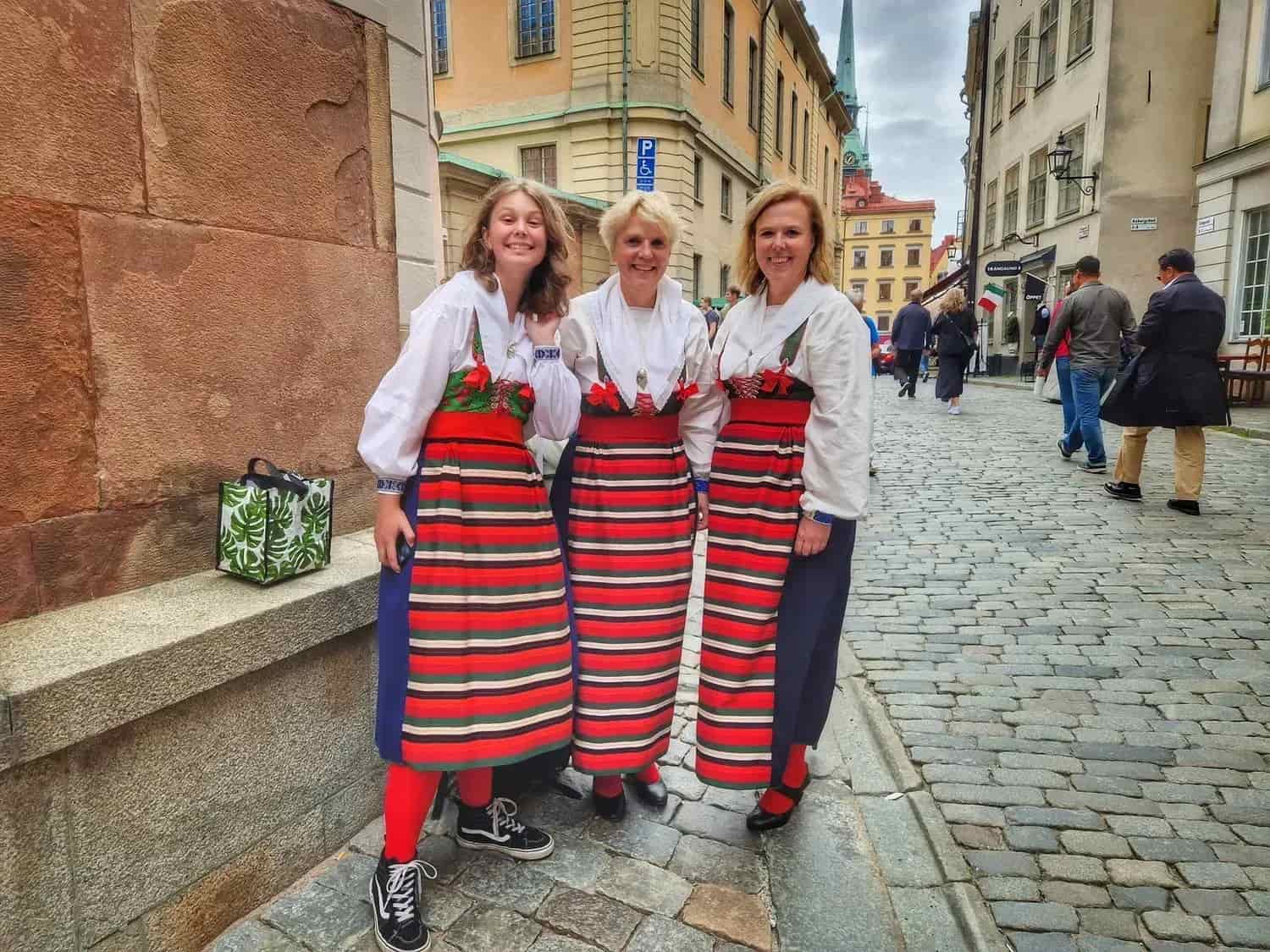
Traces of the dalkullor in today's Stockholm
Today you can still feel the presence of history.
At Hagaparken, Vasastan, Skeppsbron or along the quays of Södermalm, we walk in their footsteps.
In old laundries, archival images and folk life depictions, we meet their faces – always in motion, always working, always necessary.
Why should we remember the dalkullor?
Because their story is the story of women.
Because they shaped the cities as much as the factories, the men and the machines.
Because they challenged the norms of their time and showed that women didn't just follow along – they led the way.
Their journey from Dalarna to Stockholm is one of Sweden's most poignant stories of courage, identity, opportunity and change.