Södermalms hjältinna – Elsa Dionysia Borg
Följ med till Södermalm och upptäck Elsa Borgs inspirerande livsverk, en pionjär som hjälpte stadens mest utsatta.
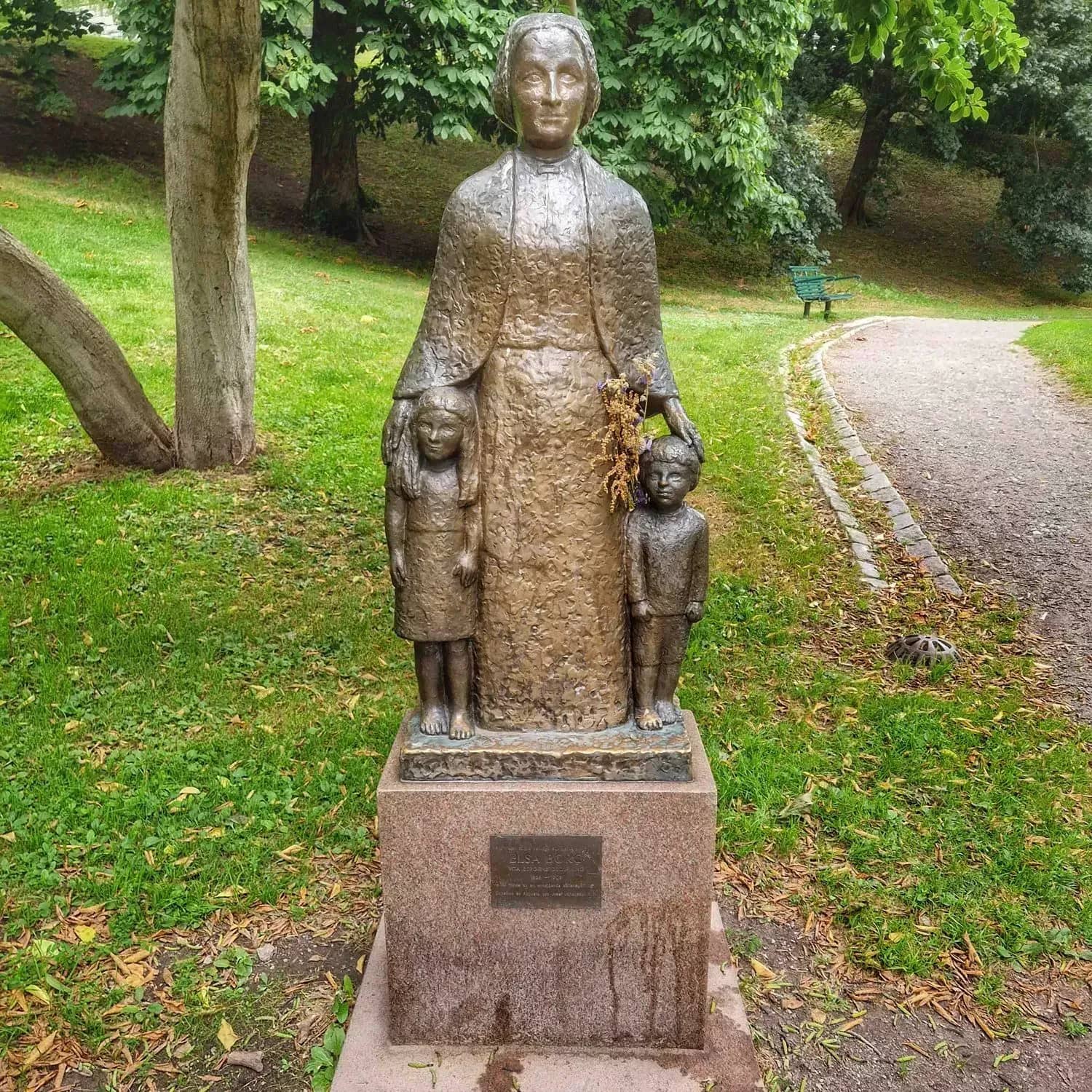
Om du har gått med mig på vandringen kring Barnängen har du säkert hört mig berätta om henne.
Jag brukar stanna vid den lilla statyn av Elsa Borg, formad av Astri Taube – en stillsam kvinna med blicken riktad mot gården nedanför.
Där, bland kolonilotter och grönska, verkade hon i slutet av 1800-talet.
Elsa Dionysia Borg föddes 1826 i Rytterne i Västmanland, men det var på Södermalm som hennes livsverk tog form.
Som ung lärarinna såg hon misären i stadens fattigkvarter – ensamheten, spriten, sjukdomarna, kvinnorna som samhället helst ville glömma.
Hon gjorde det otänkbara: hon gick dit.
Men det var inte alltid lätt att bli insläppt.
Elsa Borg lär ha haft sina knep – ibland bar hon hemstickade paket med “gåvor”, ibland uppgav hon att hon var där för att undervisa barnen.
När dörrarna väl öppnades satte hon sig ned och lyssnade, tröstade, bad, och framför allt: hjälpte.
År 1876 grundade hon sitt “Hem för fallna kvinnor” på Åsögatan.
Det växte snabbt till en hel verksamhet med undervisning, vård och arbete för kvinnor som ville börja om.
Runt sig samlade hon en skara unga kvinnor som inspirerades av hennes mod och tro – man kallade dem Elsas döttrar.
De var Stockholmspionjärer inom diakonalt och socialt arbete, långt innan myndigheter och välfärdssystem tog form.
Det sägs att Elsa Borg ofta stod under magnoliaträdet vid Barnängsområdet för att samla kraft innan hon gick ner till gården där kolonisterna nu möts.
Där någonstans, mellan blommor och tegel, finns ännu spåren av hennes närvaro – i de små gärningarna, i blicken mot människor hon vägrade ge upp på.
Elsa Borg dog 1909, men hennes idéer levde vidare i Bethesdahemmet, i den diakonirörelse hon grundade och i varje människa som fann hopp genom hennes arbete.
När jag passerar hennes staty på mina vandringar brukar jag stanna till en stund.
Det är som om hon fortfarande vakar över Södermalm – sin stadsdel, sina kvinnor, sina människor.
Hon är inte bara ett namn i historien, utan en hjältinna i det tysta.
Och varje gång jag berättar om henne känns det som om hon står där igen – kanske just under magnolian – och samlar kraft inför ännu en dag i godhetens tjänst.
✨ För det är inte bara byggnader vi guider berättar om –
utan också om de människor som har format, färgat och levt den historia vi själva vandrar i idag.