When electricity came to Stockholm – the revolution of light in everyday life
Följ med på en resa tillbaka till Stockholm på 1800-talet och upptäck hur elen revolutionerade vardagen. Läs om ljusets intåg!
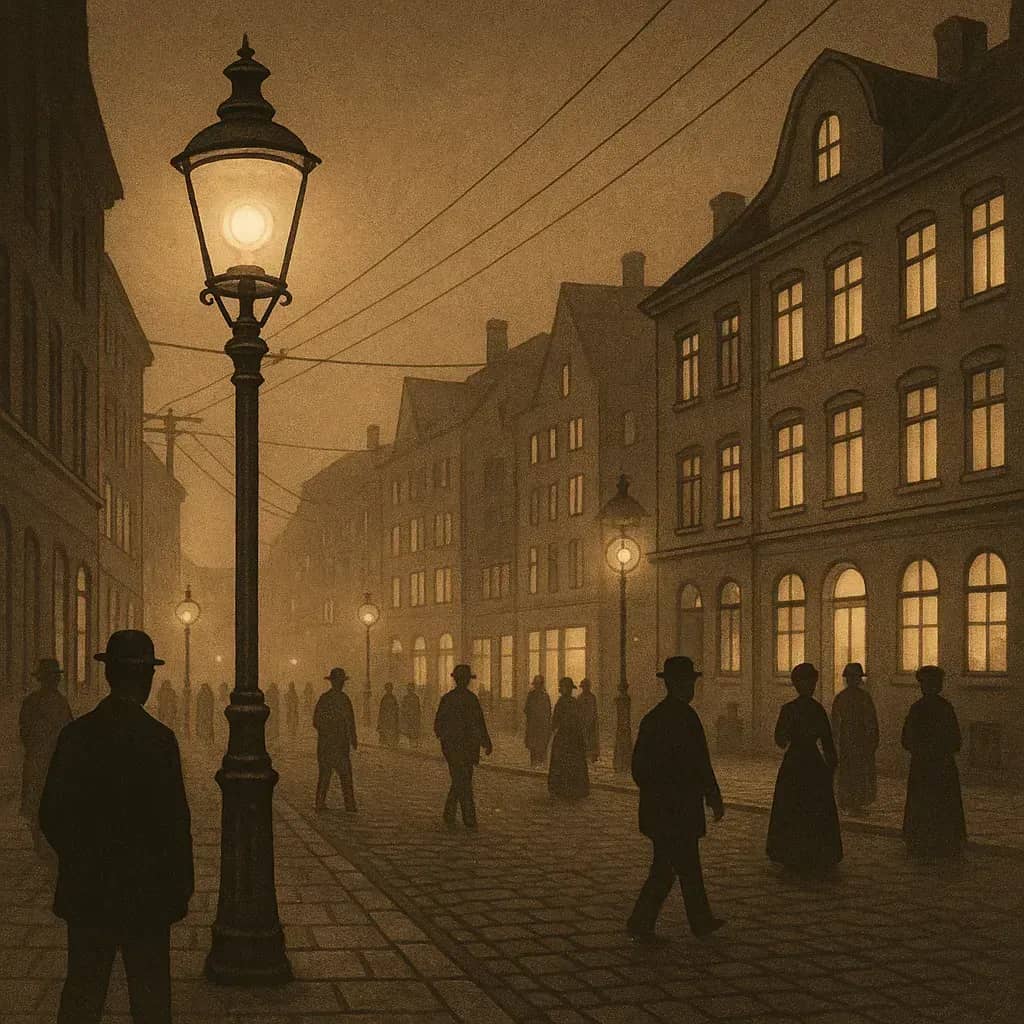
It's hard to imagine today – but just over a hundred years ago, Stockholm was a city that entered twilight after dark. The streets were lit by kerosene lamps and gaslights, and in homes people struggled with flickering flames and sooty lamp glasses.
Then came electricity – and with it a new way of life.
💡 De första gnistorna
Stockholm got its first electric lighting as early as the 1880s. At Brunkebergsverket, the city's first power plant, electricity production began in 1892. It was located on Tulegatan – in the middle of what was then called the cradle of "the electric miracle."
Initially, it was not ordinary households that benefited from the new technology, but the city's theaters, banks, department stores and factories. Lighting an electric light bulb was something exclusive – a symbol of optimism and modernity.
🕰️ El på beställning
El fanns inte tillgänglig dygnet runt.
De första abonnenterna fick el endast några timmar om dagen – främst på kvällstid, när behovet av ljus var som störst. På dagarna stod ledningarna stilla, och stadens maskiner fick vila tills kvällen åter föll över taken.
Det fanns till och med särskilda “tändtider” – ungefär som tidtabeller – som talade om när strömmen skulle släppas på.
🏠 Från teater till kök
Runt sekelskiftet 1900 började elektriciteten långsamt leta sig in i de privata hemmen. Först kom lampan i taket – en liten men revolutionerande detalj som förändrade människors dygnsrytm.
Man kunde nu läsa längre på kvällen, sy, laga mat och umgås utan att förbruka dyr fotogen eller stearin.
Men elektriciteten förändrade också ljuden i staden: fabriker kunde drivas längre, hissar började surra i våningshusen och spårvagnarna gled fram på elektriska linor.
🌆 En ny rytm av ljus
The arrival of electricity changed not only how we saw, but how we lived.
Night turned to dusk, dusk to activity. Shops started having late hours, cinemas opened their doors, and Stockholm began to shine – literally.
In the 1920s, electricity was a given in urban life, but in the countryside it would take several more decades. There, the kerosene lamp lived on well into the 1950s.
⚙️ Ljusets kulturarv
När vi idag tänder lampan utan att tänka på det, kan det vara värt att minnas att elektricitetens historia i Stockholm bara är drygt 130 år gammal – men den har format allt från vår vardagsrytm till stadens nattliv och arkitektur.
Nästa gång du promenerar förbi det gamla elverket på Tulegatan, tänk på att det var här allt började – ljusets revolution i vardagen.