The green crosses – a hidden history in Stockholm's streets and parks
Discover Stockholm's secrets! Learn to interpret the green crosses and their connection to a 250-year-old order.
During my city walks, it often happens that someone in the group suddenly stops, points and asks:
"What is that green cross?"
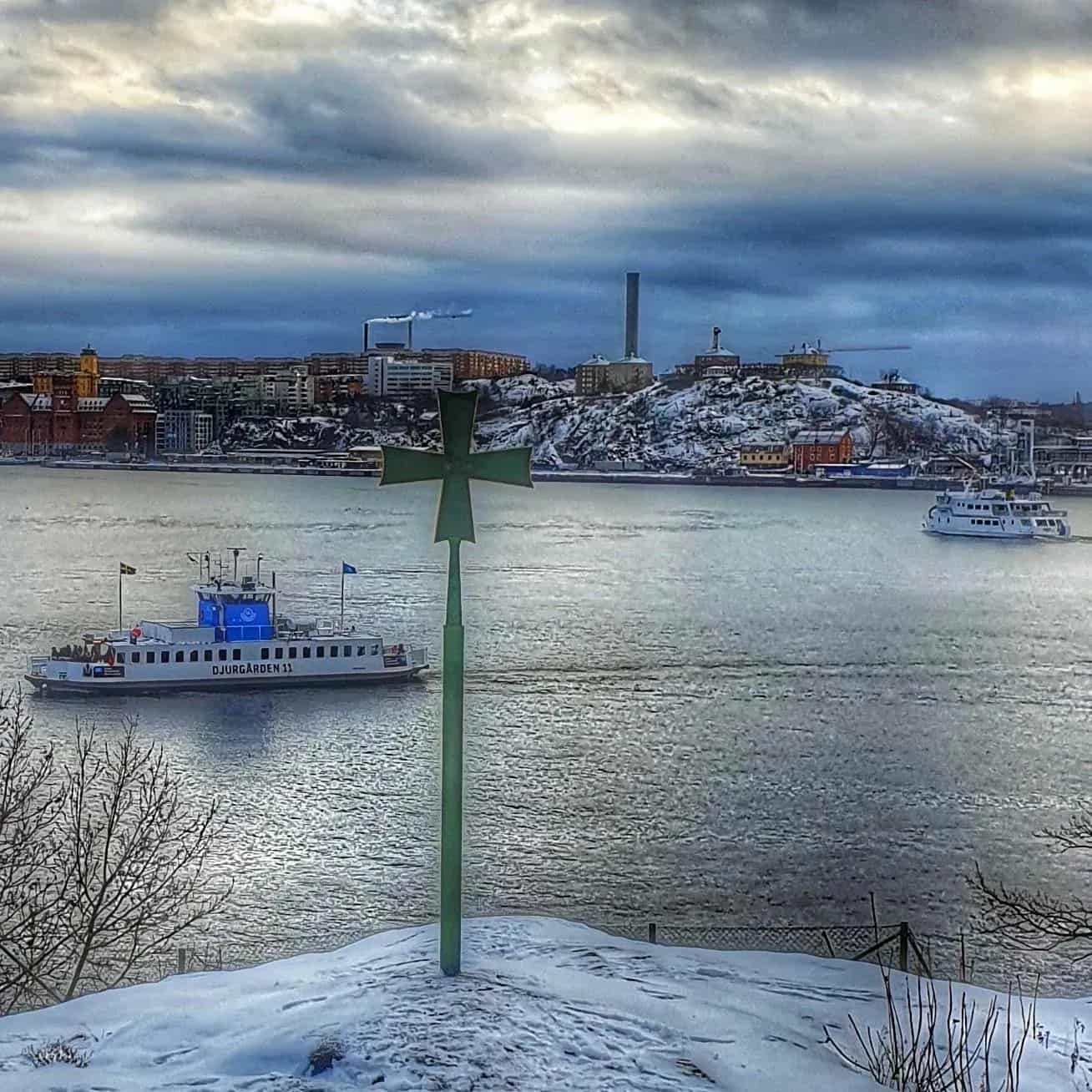
We can come across them on Långholmen, at Svindersvik, on Kungsholmen and in other places in Stockholm. They are small, discreet and easy to miss – but they carry a long history that stretches back to the 18th century.
An old order – in the middle of today's city
The green crosses belong to the Arla Coldinu-Orden, an order founded in Stockholm in 1765. The order has roots in medieval seafaring traditions and sea brotherhoods, and combines navigation history with a social and cultural network.
The seat is today at Piperska muren on Kungsholmen, and nearby is a staircase that bears the order's name – a discreet but clear sign of their long presence in the city.
Among the members have been many famous Stockholmers, and even our current king is a member.
Why crosses?
The crosses originally functioned as navigation marks – practical landmarks that helped seafarers navigate correctly, especially when entering and passing through the archipelago.
They also had a symbolic role: to show that the place was "marked" by the order, a kind of greeting from the brotherhood.
In other parts of the country and in the archipelago, the crosses may be white, but in Stockholm they are often painted in green. The color is partly practical – it is clearly visible against light stone and asphalt – and partly symbolic, as green is associated with hope, the power of nature and the seafarer's safety.
Here you can see them in Stockholm
If you know what to look for, you will find green crosses in several places. The next time you see a green cross, you can think that you are standing at a 250-year-old sign that unites shipping, secret rituals and Stockholm's history.
- Reimersholme's highest point – a cross was erected here at a celebration in the late 1700s.
- Långholmen – previously also at Kastellholmen, erected by the Arla Coldinu Order.
- The promenade between Svindersvik and Nacka boat club – a cross that many passers-by have noticed.
- Kungsholmen – under the Russian embassy in Marieberg, where a new cross was erected in 2017 on the site of an older one from 1811.
A guide anecdote
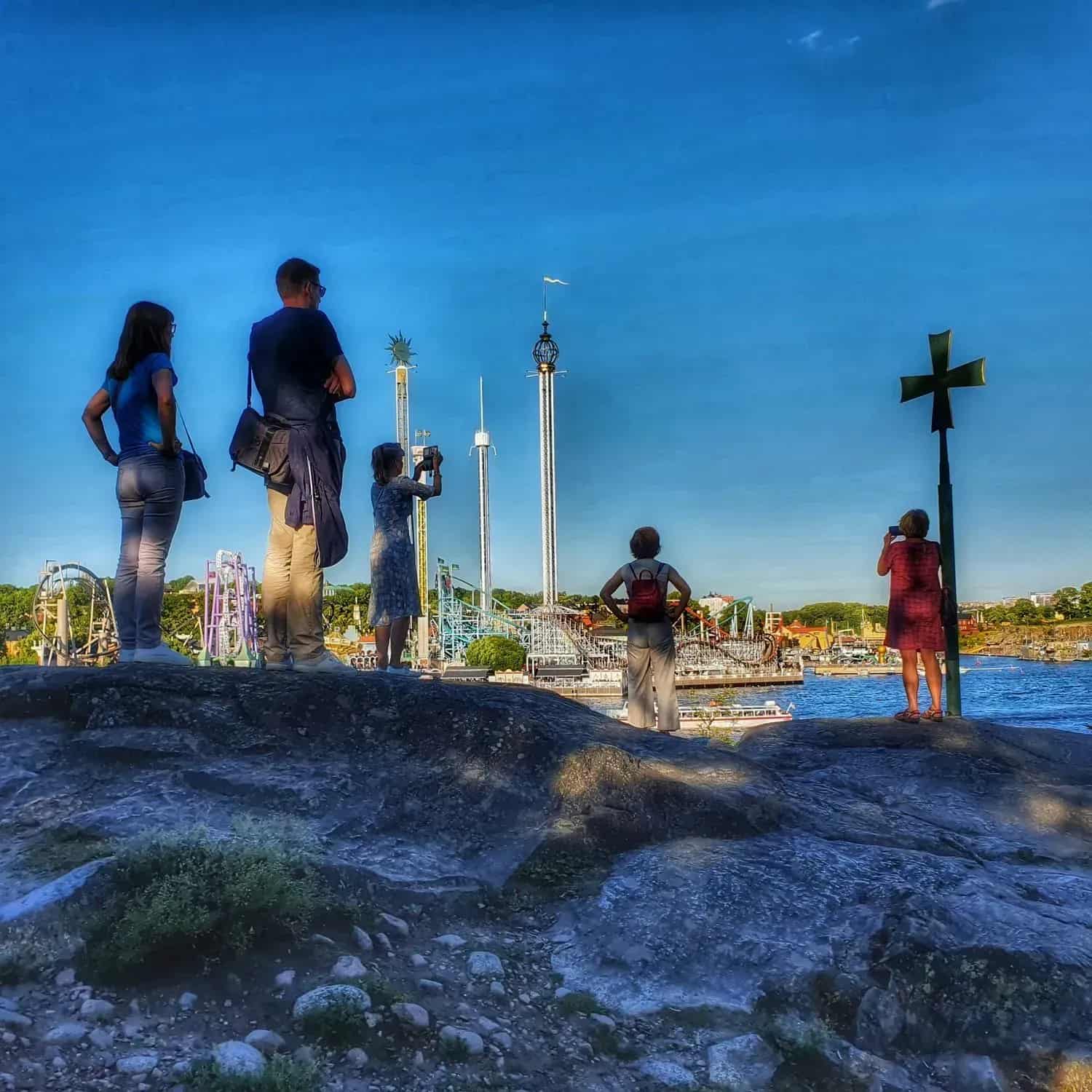
On my walks, I usually let the group stop when we find a cross. I tell them that it is not a religious cross, but a greeting from an old order that still lives and works in Stockholm. And that we, just by noticing it, are suddenly aware of a layer of the city's history that many pass by without seeing.
💡 Tips: The next time you walk on Långholmen, at Svindersvik or through Kungsholmen – keep your eyes open. The green crosses are small, but they carry stories of seafarers, brotherhood and secrets that still have their place in today's Stockholm.